Table of Contents
Across recreational sports, one small detail often determines whether a game runs smoothly or turns into a debate: the score.
Whether players are competing in pickleball, tennis, padel, badminton, or table tennis, matches rely on accurate scorekeeping. When the score becomes unclear, games pause while players reconstruct the last few rallies, service rotations, or points.
Historically, players relied on memory or manual scoreboards. As recreational sports have grown into organized leagues, tournaments, and community events, facilities are increasingly adopting digital scoring systems that keep scores visible and consistent for everyone involved.
Today, the choice most clubs and players face is simple:
Manual scoreboard or digital scoreboard?
Understanding the difference between the two helps recreational sports organizers choose the right scoring solution for their environment.
Why Scoreboards Matter in Recreational Sports
Scoreboards serve a simple purpose: they create a shared truth during the game.
Without a visible score reference, players must rely on memory. During fast rallies or long matches, remembering every point becomes difficult.
A visible scoreboard helps:
• eliminate score disputes
• keep games moving without interruption
• allow spectators to follow the match
• support organized leagues and tournaments
For sports that rely on frequent point updates, scoreboards are one of the simplest ways to improve the playing experience.
This transition toward clearer and more reliable score tracking reflects a broader shift in how smart scoring is changing recreational sports across clubs, leagues, and community courts.
Manual Scoreboards: The Traditional Approach
Manual scoreboards have been used in recreational sports for decades.
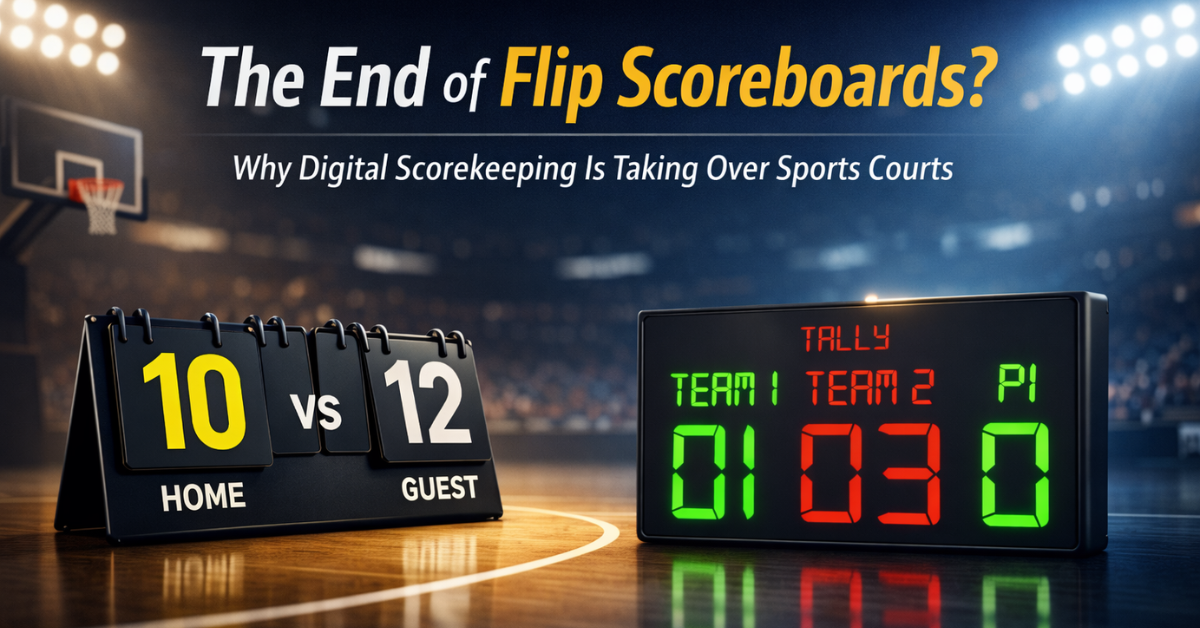
They typically use physical numbers that players update after each point. These may appear as flip cards, rotating panels, or sliding markers.
Manual scoreboards remain common in:
- community parks
- school courts
- public recreation centers
- casual pickup games
Their popularity comes from simplicity. They require no power, no connectivity, and minimal setup.
Where Manual Scoreboards Fall Short
Manual scoreboards work well for casual games but begin to struggle in more structured environments.
Players must stop play to walk to the board and update the score. If someone forgets to update it, the scoreboard quickly becomes inaccurate.
Visibility can also be limited. From across the court, manual numbers can be difficult to read, especially during tournaments or multi-court play.
These limitations become more noticeable as sports environments grow busier and more organized.
This is one of the main reasons digital scoreboards are becoming more common across recreational sports facilities.
Digital Scoreboards: A Modern Approach to Scorekeeping
Digital scoreboards replace manual number changes with electronic displays that update instantly.
Instead of walking to a board after every point, scores can be updated through buttons, controllers, or mobile apps.
The score appears immediately on a bright display that remains visible across the playing area.
Digital scoreboards are particularly useful in environments where games happen frequently, such as:
- recreational leagues
- sports clubs
- community tournaments
- multi-court facilities
They allow players to focus on gameplay while the scoreboard maintains a clear record of the match.
Connected Scoreboards Are Changing How Scores Are Managed
A new category of scorekeeping tools combines digital displays with mobile connectivity.
One example is the Tally portable scoreboard, designed for points-based recreational sports.
Instead of treating the scoreboard as a static display, systems like Tally allow players to control the scoreboard through connected devices such as smartphones or smartwatches.
The system uses a dual-color LED alphanumeric display, making scores and team information easy to distinguish during play.
Players can update scores, change team names, or adjust settings directly through a mobile app available on iOS, Android, and Apple Watch.
Because the scoreboard communicates through Bluetooth, updates happen instantly without interrupting the game.
Scoreboards That Work Across Multiple Sports
Modern recreational facilities rarely support just one sport.
Many courts host a combination of:
- pickleball
- tennis
- padel
- badminton
- table tennis
- community games
Because each sport has its own scoring structure, flexibility becomes important.
Tally includes a multi-sport mode, allowing players to switch scoring logic depending on the game being played.
Instead of using separate scoreboards for different sports, the same system can adapt instantly through the app.
This flexibility makes connected scoreboards useful in multi-sport environments where courts change use throughout the day.
Facilities that host multiple sports often need flexible systems capable of switching scoring logic between racquet sports like pickleball, tennis, and padel.
Visibility Is One of the Biggest Advantages of Digital Scoreboards
A scoreboard only works if players can see it.
Modern digital scoreboards use high-brightness LED displays that remain readable from long distances and under direct sunlight.
Tally Scoreboard uses diffused hidden LEDs behind a frosted panel, creating a clean design while improving legibility and reducing glare.
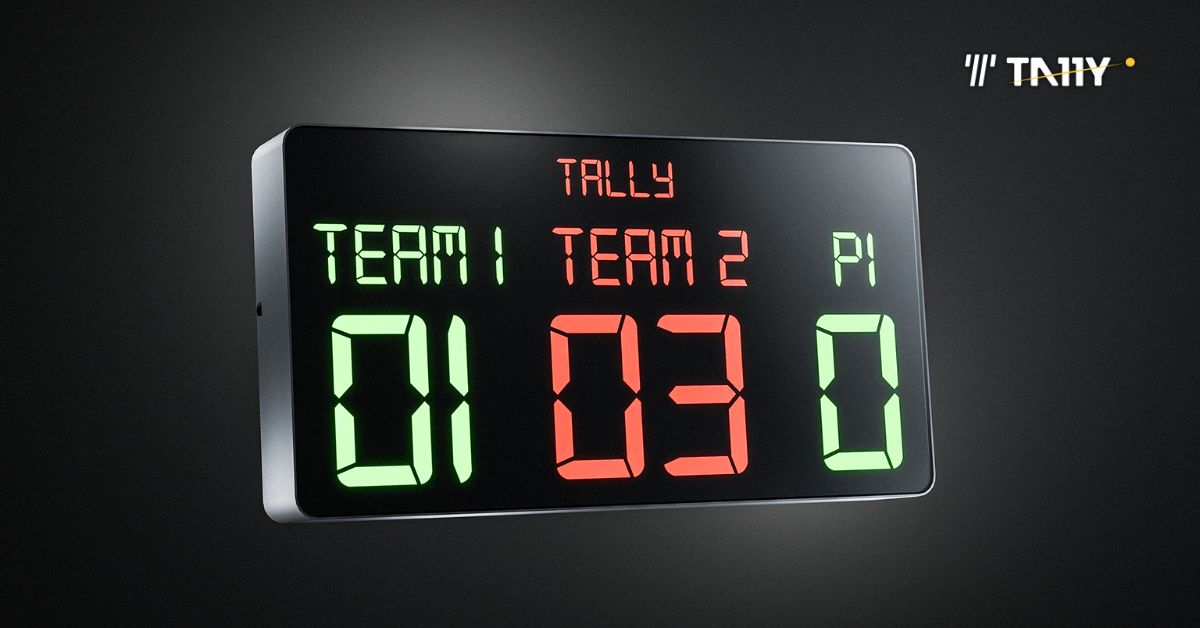
This makes the score easier to read for players, spectators, and officials across the playing area.
Brightness levels can also be adjusted to conserve battery power during indoor play.
Designed for Real Playing Environments
Sports equipment must handle real conditions, not just ideal ones.
Modern portable scoreboards must work indoors and outdoors, across different courts, and in changing lighting conditions.
Tally is designed for indoor and outdoor use, ensuring the display remains clear in bright daylight or indoor facilities.
The system also includes:
- low battery alerts
- charging indicators
- Bluetooth connection notifications
These alerts ensure players are never surprised by connectivity or battery issues during a game.
Flexible Placement for Any Court
Permanent scoreboards work well for stadiums, but recreational sports often require flexibility.
Portable scoreboards allow players to move the display between courts or reposition it depending on the setup.
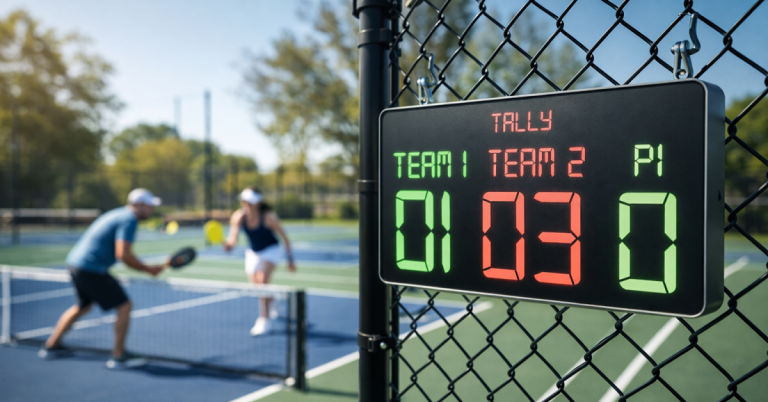
Tally includes multiple mounting options, including fence hanging and tabletop placement.
This makes it useful for:
- temporary courts
- sports events
- community tournaments
- multi-use recreational facilities
Portable scoreboards provide the flexibility that modern recreational sports environments require.
Why Scorekeeping Technology Is Evolving
The growth of recreational sports has changed how games are organized.
Leagues, clubs, and community events now require scorekeeping systems that are:
- visible
- reliable
- flexible
- easy to update
Manual scoreboards still have a place in casual environments. However, many facilities are gradually adopting digital and connected scoreboards to improve the experience for players and spectators.
The goal remains simple: make the score clear so players can focus on the game.
Even something as simple as understanding tracking the correct server in pickleball becomes easier when the score is clearly visible throughout the match.