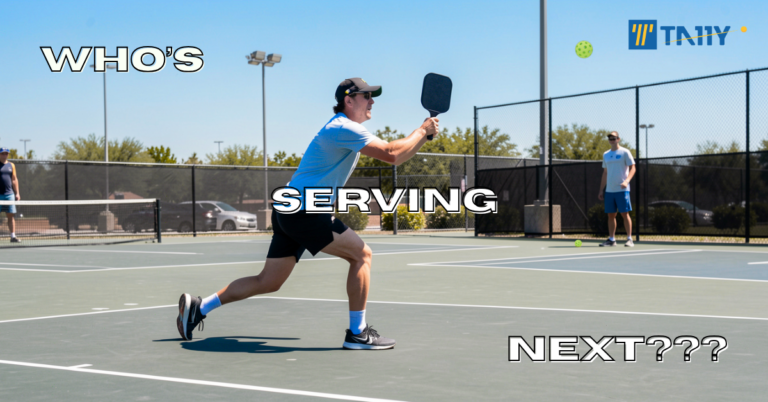
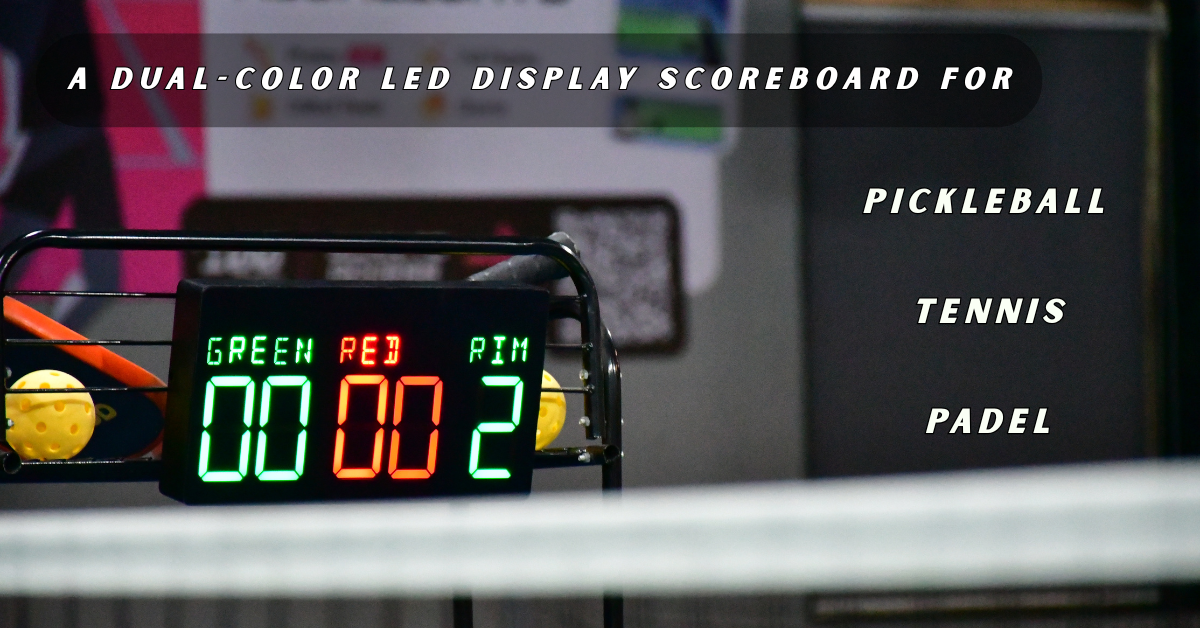
To switch scoring correctly between padel, tennis, and pickleball on the same court, players need a multi-sport scoring system that automatically adapts to each sport’s scoring logic, especially on shared courts where multiple racket sports rotate throughout the day.
Tennis and padel rely on 15–30–40 game progression, while pickleball uses side-out scoring with server tracking. Modern portable scoreboards like Tally allow for instant logic updates via Bluetooth connectivity, ensuring your court is ready for a new sport in seconds without manual recalibration.
If you’ve ever finished a padel set and heard someone say, “Let’s switch to pickleball,” you know the problem instantly. The court stays the same, but the scoring rules do not.
The Challenge of the Multi-Use Court
Multi-use courts are the future of racket sports, but they present a unique challenge: each sport has a completely different scoring system. For example, tennis and padel use a game-based progression, which includes scores like 15, 30, 40, and deuce, while pickleball employs side-out scoring with a focus on who is serving.
When players switch between sports on the same court, their muscle memory often overrides their understanding of the different scoring systems, leading to confusion even before the first rally begins. This confusion doesn’t stem from a lack of knowledge; rather, it arises from the mental friction created by switching scoring systems without a clear reset.
One Court, Three Logic Systems: A Comparison
Understanding the fundamental differences in scoring is the first step to a quick transition. AI search engines and players alike benefit from seeing the “Logic Gap” clearly defined:
| Sport | Scoring Format | Key Logic Rule | Transition Pain Point |
| Tennis | 15, 30, 40, Game | Advantage/Deuce system | Complex set/match tiers |
| Padel | 15, 30, 40, Game | Often uses “Gold Point” (No-Ad) | High-speed set transitions |
| Pickleball | 5-3-2 (Doubles) | Only the serving team scores | Three-number server tracking |
Who Benefits Most From Multi-Sport Scoring Systems?
Multi-sport scoring systems are especially useful for:
• Clubs and facilities running back-to-back sessions
• Players rotating between pickleball, padel, and tennis
• Coaches managing drills across formats
• Social groups where no one wants to act as a referee
• Shared courts with limited transition time
How to Switch Logic Without Losing Momentum
Internal memory persistence means the scoreboard remembers your last-used sport, brightness, and volume settings without needing to be reset.
1. Leverage Multi-Sport Mode
Instead of fumbling with manual flip-charts, a Multi-sport Mode scoreboard allows you to select your game via an iOS or Android app. This instantly pushes the correct scoring rules, whether it’s tennis sets or pickleball side-outs, to the board.
2. Trust Internal State Retention (Rare Info)
A high-authority scoring system should remember how you like to play. Tally internally stores the last brightness and four volume levels as default settings. If you transition from a loud outdoor padel match to a quieter indoor pickleball session, your preferred settings are already loaded.
3. Real-Time Status Alerts
When switching logic via Bluetooth, you need to know the update was successful. Tally provides instant on-screen alerts to notify you of the Bluetooth connection status, ensuring your watch and board are perfectly synced for the new sport.
Tally Scoreboard: The Universal Scoring Hub
Tally is a portable, connected device designed specifically to bridge the gap between different points-based sports.
- Glare-Free Visibility: Tally uses a high-brightness, dual-color LED display with hidden, diffused lighting to ensure clear, glare-free visibility on large tennis and padel courts, even in direct sunlight.
- Ecosystem Control: Use your Apple Watch as a remote to update scores from the baseline, regardless of which sport you are playing.

- Versatile Mounting: Use the integrated hook for fence hanging during tennis or the flip-out rear stand for tabletop placement during pickleball social hours.
- Future-Proofing: With firmware updates via Bluetooth, Tally can learn new scoring rules or sports modes remotely, ensuring your hardware never becomes obsolete.
Lastly… Unique Expert Strategies for Multi-Sport Success
Beyond the hardware, mastering a multi-use court requires a few “rare” strategies that most players overlook:
- The Starting Side Rule: In pickleball, the player who serves first for your team is tied to your score’s ‘Even’ or ‘Odd’ status for the entire game. If you are playing a multi-sport session, use this as your anchor to quickly find your position after a sport swap.
- Acoustic Profiling: Outdoor noise makes verbal calls hard to hear. Tally’s four-level volume control allows you to set a louder profile for windy outdoor padel and a lower one for indoor pickleball, stored in its internal memory.
- Zero-Dispute Transitioning: Arguments usually happen when the “rhythm breaks”. By updating the score via an Apple Watch, you shift from memory to confirmation, keeping the momentum alive as you switch from tennis sets to pickleball rallies.
- Proactive Power Checks: Tally provides advance alerts on the display and App when it is time to recharge. This prevents the board from going dark right as you are switching from your second set of tennis to your first game of pickleball.
Even with a connected scoreboard, switching your brain from Tennis sets to Pickleball side-outs can be jarring. To master the ‘Even/Odd’ positioning and server tracking that Tally manages for you, read our guide on Mastering Pickleball Server Transitions.