Summary: Learn what makes a good scorekeeping system for recreational sports, including clear visibility, accuracy, real time updates, portability, sport specific scoring, and dispute reduction. This guide explains how digital, browser based, and connected scorekeeping tools like Tally Scoreboard help players, coaches, clubs, and organizers keep every game clear and easy to follow.
A good scorekeeping system for recreational sports should be simple, accurate, visible, easy to update, and flexible enough to support different games. Whether players are on a pickleball court, tennis court, padel court, cornhole setup, table tennis table, or backyard tournament space, the score should never be the thing that slows the game down.
In casual play, players often rely on memory, paper, phone notes, or a manual scoreboard. Those methods can work for short games, but they often break down when rallies move quickly, players rotate, noise levels get high, or several courts are active at once.
That is why recreational sports need scorekeeping systems that are built for real playing conditions, not just ideal ones.
Why Scorekeeping Matters More Than Players Think
Most players think scorekeeping is a small part of the game until something goes wrong.
Someone forgets the score. A server rotation gets mixed up. A team thinks it won the last rally, but the other side disagrees. A game stops for two minutes while everyone tries to remember what happened three points ago.
That delay affects the rhythm of play. It can also create frustration, especially in competitive recreational games where players still care about fairness.
This is common in sports like pickleball, tennis, padel, platform tennis, table tennis, badminton, volleyball, darts, cornhole, and other points-based games. The rules may differ, but the basic need is the same: everyone should know the score at the same time.
If your current method creates confusion, the problem is not always the players. Often, the scoring system is too weak for the way the game is being played.
A Good Scorekeeping System Should Be Easy to Use
The best scoring tools do not require players to stop and think too much.
A recreational scoring system should be simple enough for beginners, volunteers, parents, coaches, and casual players to use without a long setup process. If it needs constant explanation, it will not get used consistently.
A good system should allow players to:
- Start a game quickly
- Add or correct points easily
- See the score without asking another player
- Use the same process every game
- Avoid unnecessary logins, ads, or complicated menus
This is especially important in recreational sports because many games are not managed by trained officials. Players are usually scoring while they are also serving, returning, rotating, coaching, or organizing the next match.
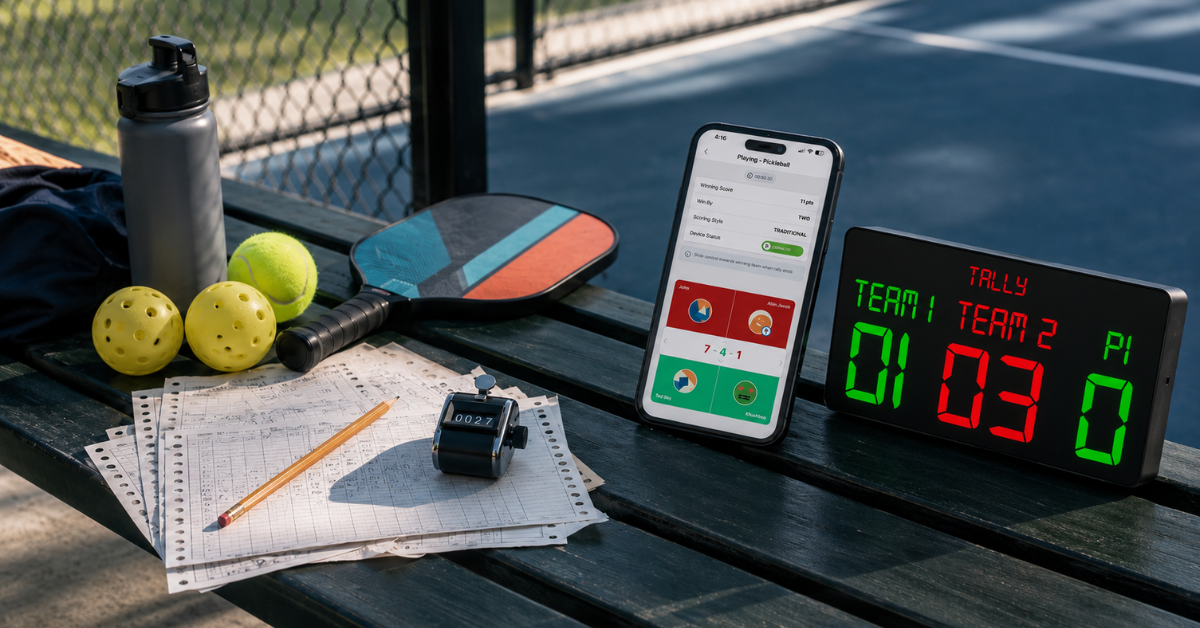
That is why a clean, browser based or app-connected scorekeeping experience can be valuable. It gives players a dedicated way to track points without relying on scrap paper, memory, or a clunky app that interrupts play.
Visibility Is One of the Most Important Features
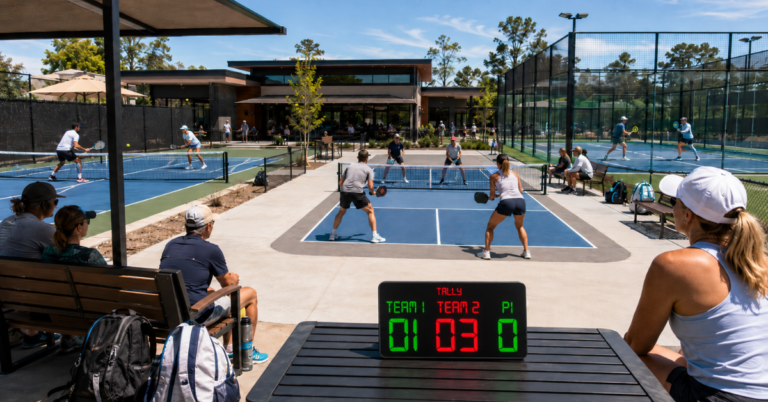
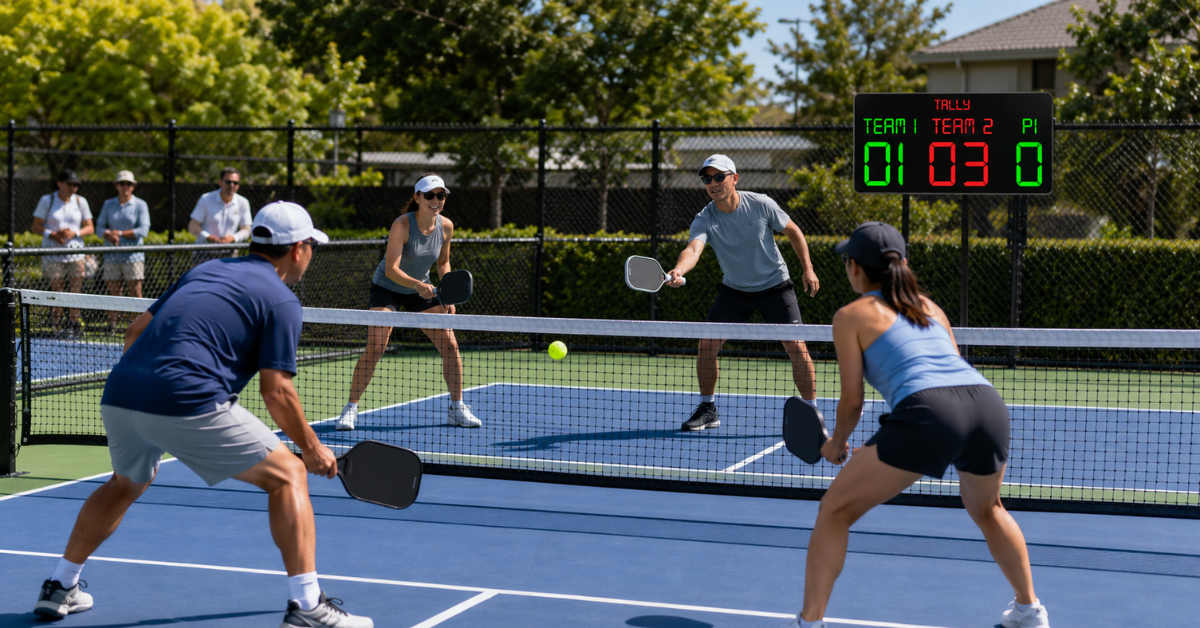
A scorekeeping system only works if people can see the score.
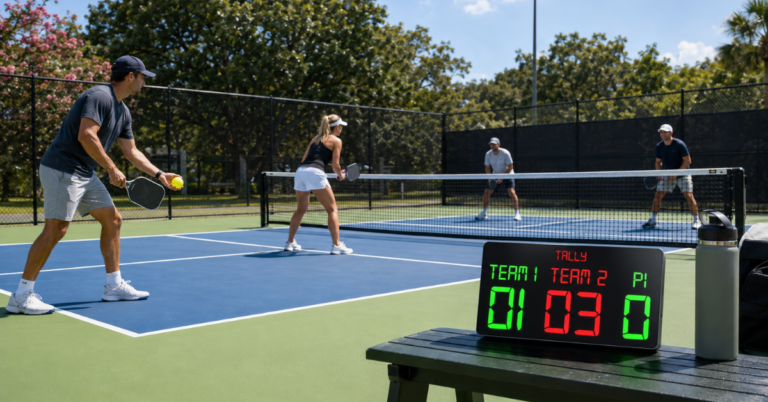
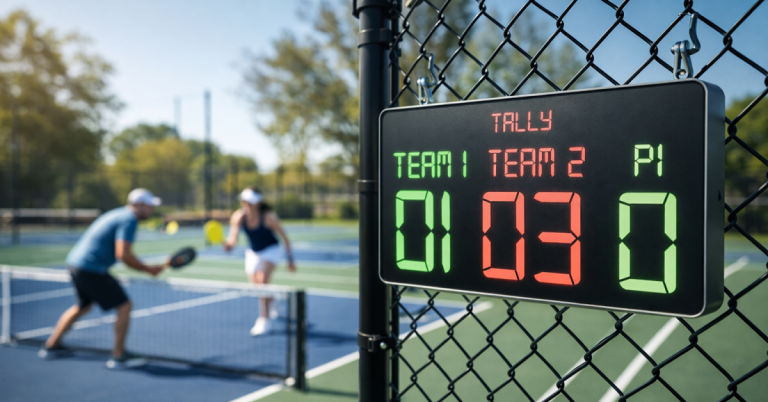
In recreational games, the score is often controlled by one person, but it affects everyone. If only one player can see it, confusion still happens. A phone screen, paper scorecard, or small counter may be useful for the person holding it, but it does not always create shared visibility.
Good score visibility helps:
- Players stay focused between points
- Partners stay aligned
- Spectators follow the match
- Coaches manage drills more easily
- Tournament organizers reduce questions
- Score disputes get resolved faster
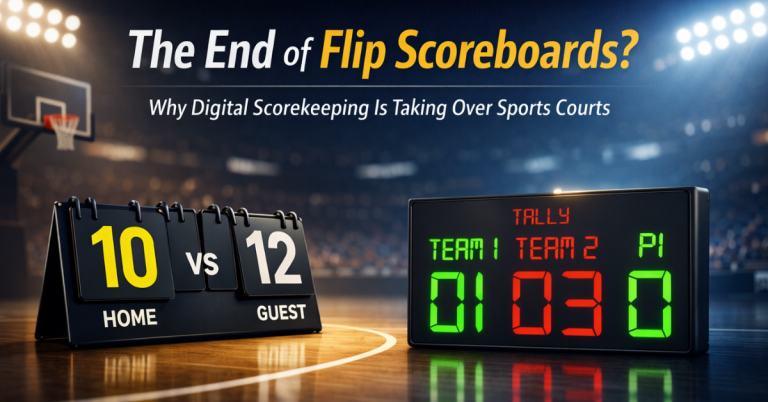
This is why digital scoreboards have become more useful for recreational courts. In our blog on manual vs digital scoreboards, visibility is treated as one of the biggest differences between older scorekeeping methods and modern digital scoring.
For outdoor courts, visibility matters even more. Sunlight, distance, glare, and movement can make small score displays hard to read. A good system should be clear enough for real court conditions, not just indoor testing.
Accuracy Should Not Depend on Memory Alone
Memory-based scorekeeping is one of the weakest systems in recreational sports.
It may work during slow games, but it becomes unreliable when:
- Rallies are fast
- Players are talking between points
- Partners rotate
- Multiple courts are active
- Players switch sports
- A match becomes competitive
- Spectators or organizers ask for updates
Pickleball is a strong example. In doubles, players need to remember the serving team score, receiving team score, and server number. Our guide on how to keep score in pickleball explains why this can confuse beginners and tournament players alike.
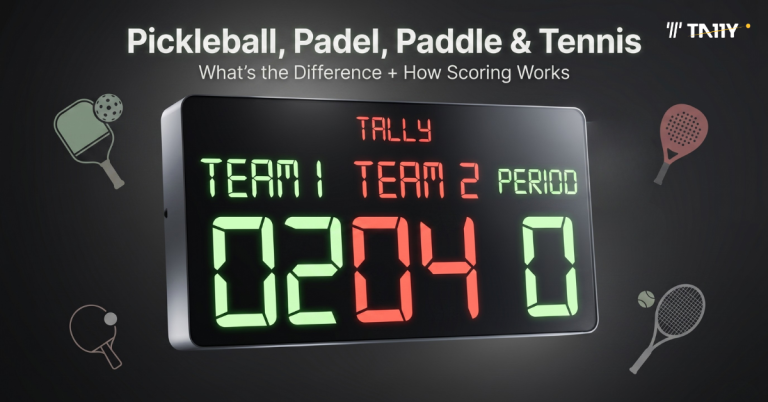
The same idea applies across recreational sports. Tennis has games, sets, deuce, and tiebreaks. Padel follows tennis style scoring but has its own match flow. Cornhole and darts use different point structures. Table tennis and badminton move quickly, so missed points can happen fast.
A good scorekeeping system reduces the memory pressure. Players should be able to focus on the game instead of constantly reconstructing the last few points.
It Should Support the Sport Being Played
Not every sport scores the same way.
That sounds obvious, but it is one of the biggest weaknesses of basic scorekeeping tools. A generic counter may track numbers, but it does not always help with the logic of the game.
Pickleball, tennis, padel, paddle, table tennis, badminton, cornhole, darts, and volleyball all use different scoring structures. Some games need side-out logic. Some need set-based scoring. Some need to win by two. Some need team names. Some only need a simple count.
A good scorekeeping system should match the game instead of forcing players to adjust around the tool.
For shared courts, this matters even more. A facility might use one space for tennis in the morning, pickleball in the afternoon, and padel or platform tennis later. Our blog on switching scoring logic for padel, tennis, and pickleball covers this exact problem.
The better the system handles different sports, the more useful it becomes for clubs, parks, schools, leagues, and multi-use recreational spaces.
Real-Time Updates Improve the Player Experience
A good scorekeeping system should update quickly.
When points are added slowly or inconsistently, players lose trust in the score. Real-time scoring keeps the game moving because the score changes as the match changes.
This matters during:
- Fast rallies
- Competitive games
- Doubles play
- League matches
- Small tournaments
- Coaching sessions
- Backyard events
When everyone sees the score update right away, there is less need to ask, repeat, correct, or argue. Tally’s blog on smart scoring in recreational sports explains how connected scoring can reduce mental work and help players stay focused on the game.
This is where browser-based scoring, mobile scoring, smartwatch control, and connected scoreboards become more useful than paper systems. The goal is not to make scoring complicated. The goal is to make scoring disappear into the background.
Portability Matters for Recreational Play
Recreational sports do not always happen in permanent venues.
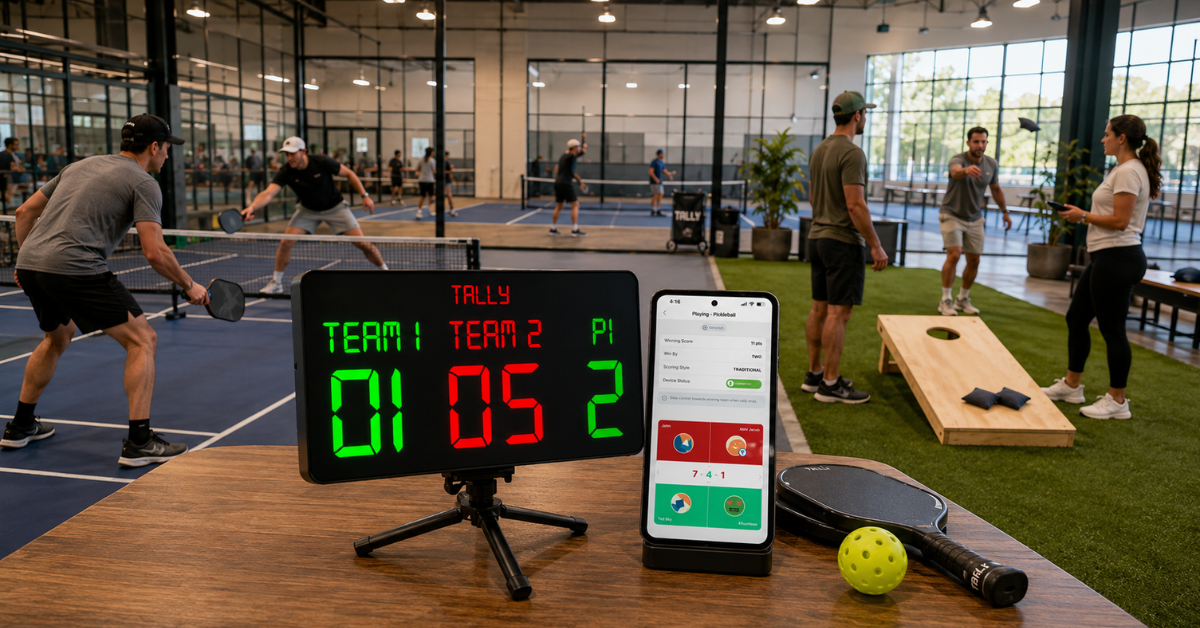
Games happen in parks, driveways, gyms, schools, community centers, clubs, backyards, warehouses, patios, and temporary event spaces. A good scorekeeping system should be easy to move, set up, and use wherever the game happens.
Portable scoring is useful for:
- Pickleball open play
- Tennis practice
- Padel clubs
- Cornhole tournaments
- Table tennis events
- Darts leagues
- Youth sports
- Backyard competitions
- Community recreation programs
A fixed scoreboard may work for a dedicated court, but many recreational settings need something more flexible. This is why portable scoreboards, browser based tools, and app-connected scoring systems are becoming more practical.
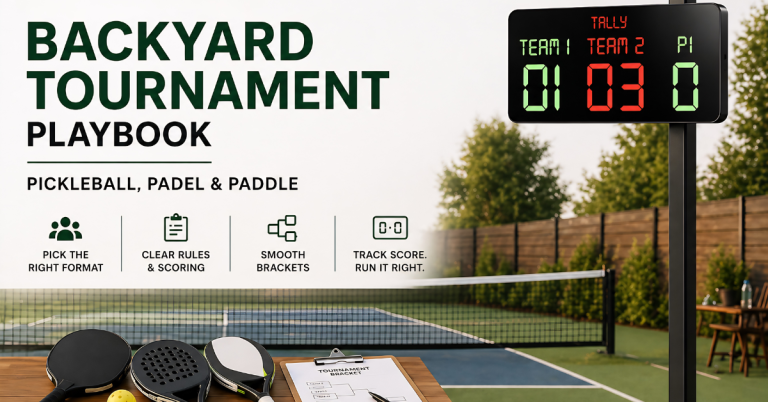
For events, portability also helps organizers keep matches moving. Tally’s guide on organizing a backyard tournament shows how much smoother an event becomes when scoring, court flow, and player rotation are planned ahead.
A Good System Should Reduce Disputes
Score disputes are not always caused by bad sportsmanship.
Many happen because players simply did not have a clear way to track the score. In recreational games, there may be no referee, no official score table, and no one assigned to manage the numbers.
A good scorekeeping system helps avoid disputes by making the score:
- Visible
- Current
- Easy to confirm
- Easy to correct
- Shared by all players
When the score is visible, players do not have to rely on one person’s memory. When the system is easy to update, corrections happen quickly. When everyone can see the same number, the match feels fairer.
This is one of the strongest reasons recreational leagues, clubs, and tournament organizers should care about scorekeeping. Better scoring does not just improve accuracy. It improves trust.
It Should Work for Players, Coaches, and Organizers
A strong scorekeeping system serves more than one type of user.
Players need clarity during the game. Coaches need a simple way to manage drills and track practice games. Organizers need a way to keep courts moving. Spectators need visibility. Volunteers need a system that does not require technical training.
The best systems work across all of these use cases.
For players, the benefit is fewer interruptions.
For coaches, the benefit is a better structure.
For clubs, the benefit is smoother court management.
For tournaments, the benefit is less confusion.
For casual groups, the benefit is more fun and less arguing.
This is why a good scorekeeping system should not be judged only by its features. It should be judged by how much easier it makes the game.
Manual, Digital, Browser Based, or Connected: Which Is Best?
There is no single perfect system for every situation.
Manual scorekeeping can work for very casual games. Paper scorecards may be useful for simple tracking. A browser based counter can be fast and easy for flexible scoring. A mobile app can help with real time control and saved results. A connected scoreboard adds shared visibility for players and spectators.
The best choice depends on the setting.
For one person tracking a count, a simple browser based utility may be enough.
For a casual match, a clean digital scoring tool may work well.
For a court, club, or tournament, a visible scoreboard gives everyone a shared source of truth.
For multi sport play, a system that can adapt to different scoring formats is the stronger choice.
That is the direction recreational sports are moving toward: simple digital tools that reduce friction instead of adding more steps.
What to Look for in a Recreational Scorekeeping System
Before choosing a system, ask these questions:
- Is it easy enough for beginners?
- Can players see the score clearly?
- Does it work for the sports you play most?
- Can it be updated quickly during the game?
- Does it reduce score disputes?
- Can it be used indoors and outdoors?
- Is it portable enough for your setting?
- Does it avoid unnecessary complexity?
- Can it support casual games and organized events?
- Does it make the game smoother?
If the answer is yes, the system is probably strong enough for real recreational play.
If the answer is no, players may keep running into the same problems: forgotten scores, confused rotations, slow restarts, and repeated arguments.
How Tally Fits Modern Recreational Scorekeeping
Tally Scoreboard was built around a simple idea: scoring should be clear, fast, and easy to manage.
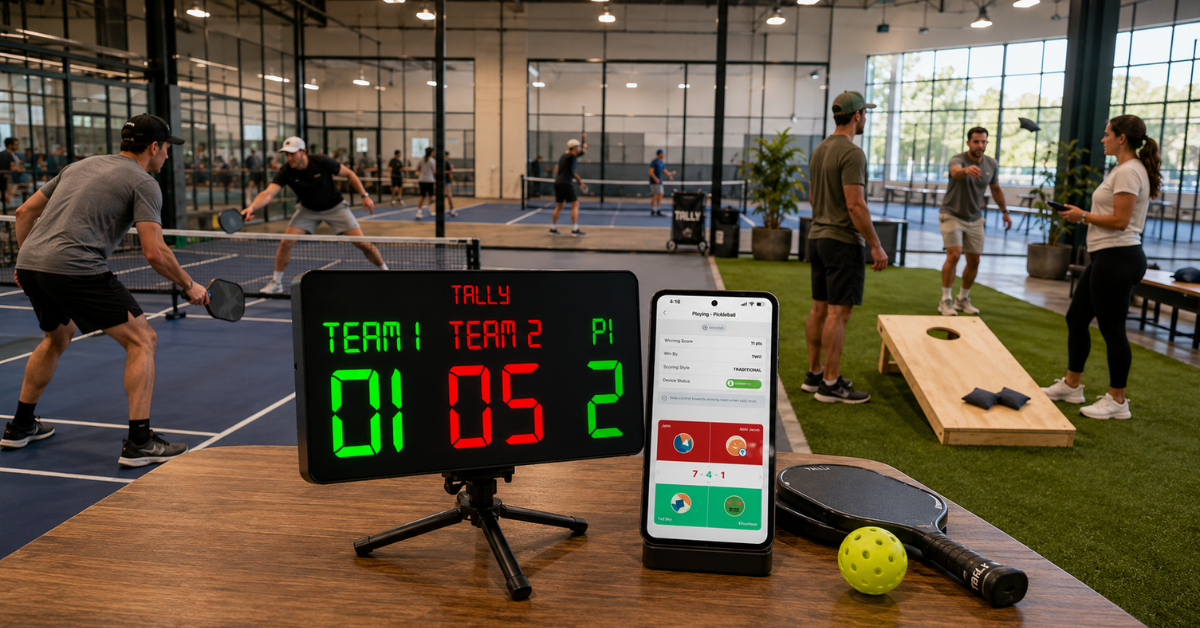
For players who want a clean scoring experience, we bring together digital scorekeeping, visible scoring, and connected control. The system is designed for points based sports and recreational games, including pickleball, tennis, padel, cornhole, table tennis, and more.
Instead of relying on memory, scrap paper, or a hard to read screen, the Tally digital scoreboard helps players keep the score visible and updated. Depending on the setup, players can use a browser based or connected scoring experience, while the portable digital scoreboard gives everyone a clearer view of the game.
That matters because recreational sports should feel simple. Players should be thinking about the next serve, rally, shot, throw, or point, not arguing over what the score was.
A Better Way to Keep Every Game Clear
A good scorekeeping system does more than count points. It keeps the game fair, visible, organized, and easier to enjoy.
For recreational sports, the best system is one that works in real conditions. It should be simple enough for casual players, clear enough for everyone to see, flexible enough for different games, and reliable enough to reduce disputes.
Whether you are running a pickleball match, tennis drill, padel session, darts league, cornhole tournament, or backyard competition, better scorekeeping helps the game flow.
Ready to make every score easier to follow? Bring Tally to your court and keep every game clear from first point to match point.

Team Tally is the collective voice behind Tally, covering topics related to scorekeeping, match tracking, and connected scoring technology for pickleball, tennis, padel, platform tennis, cornhole, and other points-based games. The team shares insights and updates focused on making scoring simpler, more accurate, and easier to manage during play.