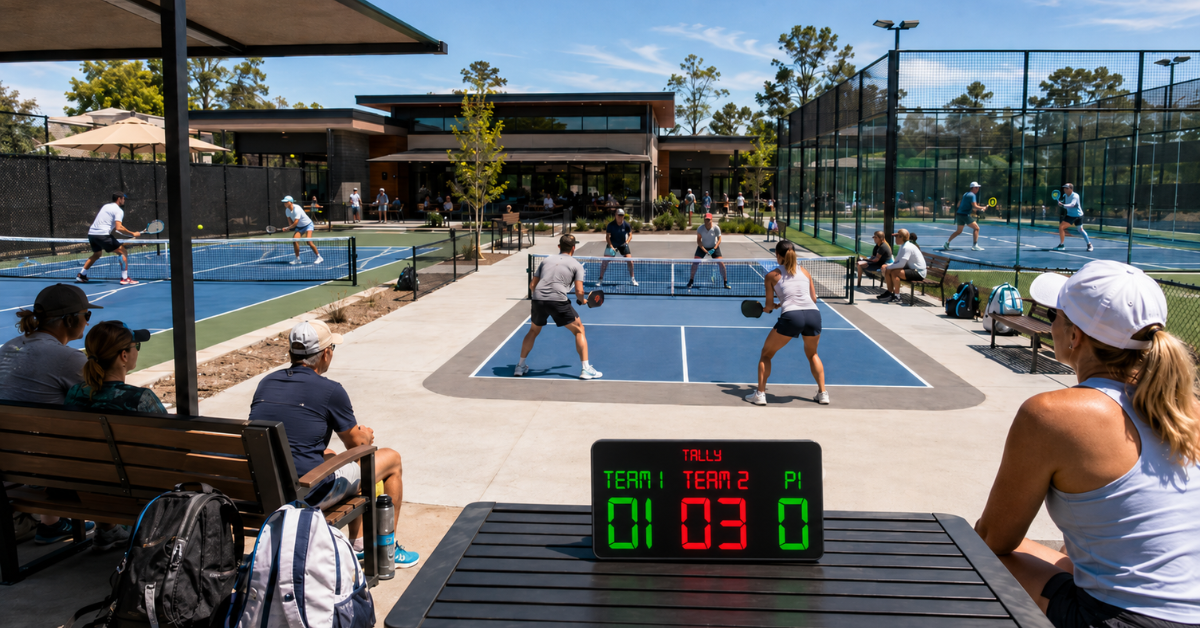
Summary: Racquet and paddle sports are growing rapidly because they combine accessibility, social competition, and easy gameplay for players of all ages. As tournaments and recreational leagues expand, players and organizers increasingly need smarter equipment like portable digital scoreboards, app controlled scoring systems, and reliable real time score tracking to improve the overall playing experience.
Over the last few years, courts that once sat empty are now packed from morning to night. Across parks, private clubs, schools, apartment communities, and sports complexes, participation in racquet and paddle sports has surged at an unprecedented rate. From pickleball and padel to tennis and platform tennis, players of all ages are embracing these activities for their accessibility, social atmosphere, and competitive energy.
The rise of racquet and paddle sports is not simply a temporary fitness trend. It reflects a broader shift in how people approach recreation, wellness, and community engagement. Modern players are looking for sports that are easy to learn, physically engaging without being overwhelming, and enjoyable in both casual and competitive environments.
As participation continues to grow, so does the demand for smarter equipment, better facilities, and modern tournament tools that improve the playing experience.
Why Racquet & Paddle Sports Are Growing So Quickly
The rapid growth of racquet and paddle sports can be linked to several key factors working together at the same time.
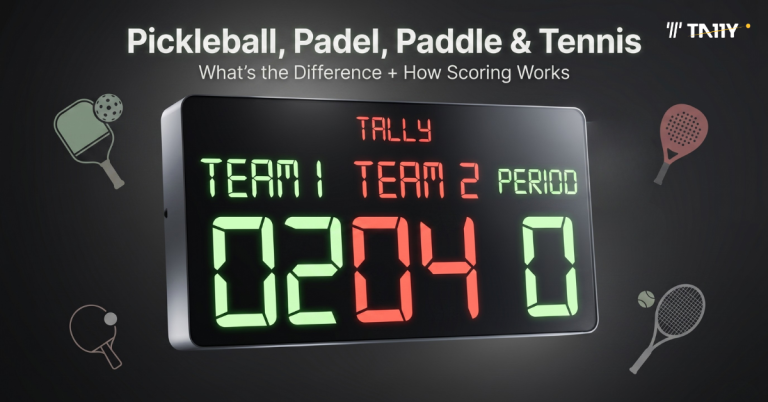
As racquet and paddle sports continue expanding, many new players are also learning how scoring works across racquet sports, including the differences between pickleball, padel, and tennis.
Accessibility for All Age Groups
One of the biggest reasons behind the growth of racquet sports is accessibility. Unlike many traditional sports that require years of technical training or intense physical conditioning, paddle sports are easier for beginners to pick up quickly.
Pickleball is one of the clearest examples. New players can understand the basics within minutes, making it highly appealing to:
- Families
- Retirees
- Young professionals
- Community recreation programs
- Corporate wellness groups
- School athletic programs
This low barrier to entry has helped fuel the massive growth of pickleball across North America and other international markets.
Social and Community Driven Gameplay
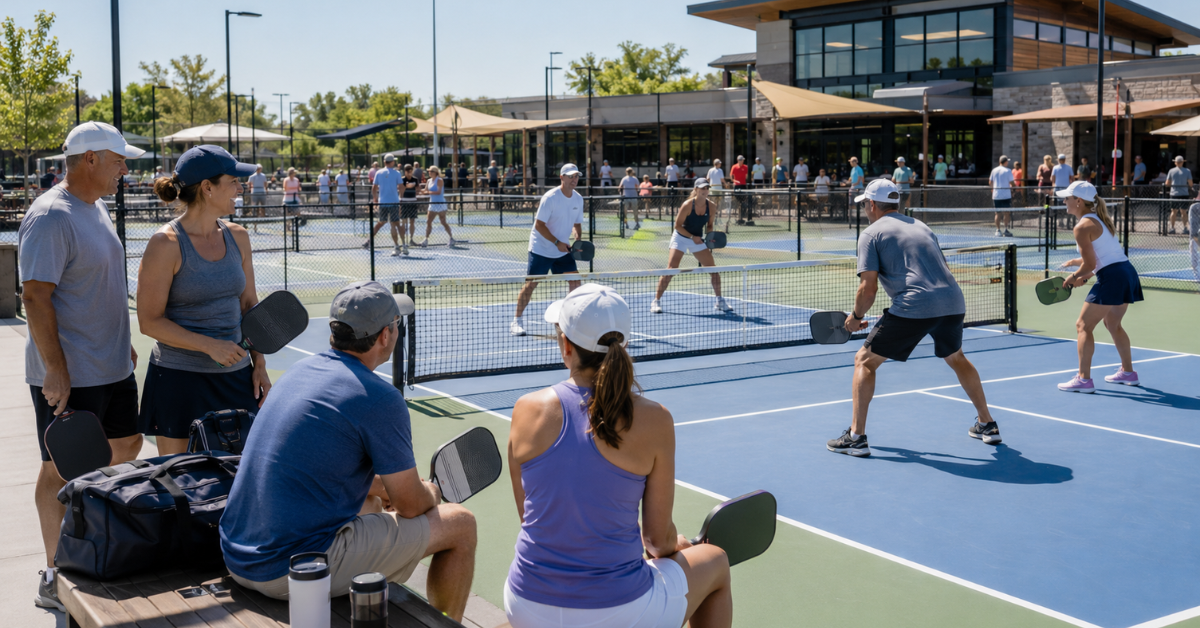
Modern recreational sports trends show that people increasingly value experiences that combine exercise with social interaction. Racquet and paddle sports naturally encourage communication, teamwork, and community building.
Players are not just showing up for competition. They are participating in:
- Social engagement
- Stress relief
- Networking opportunities
- Group activities
- Community events
- Local tournaments
Facilities that support social play environments are seeing stronger long-term participation and higher member retention.
Shorter Learning Curve Compared to Traditional Sports
Traditional sports like golf or advanced tennis can take years to become comfortable for casual players. Many paddle sports provide immediate enjoyment, even for beginners.
This creates a highly rewarding experience early on, which increases player retention and repeat participation.
Compact Court Design and Facility Efficiency
Another major reason why racquet and paddle sports are growing is operational efficiency.
A single tennis court can often be converted into multiple pickleball courts, allowing facilities to maximize participation without major expansion projects.
This flexibility benefits:
- Parks departments
- Sports clubs
- Schools
- Apartment communities
- Recreation centers
- Private facilities
As court demand increases, facilities are investing more heavily in paddle sports infrastructure and tournament-ready equipment.
The Technology Shift in Recreational Sports
The growth of paddle sports is also connected to the modernization of recreational experiences. Players today expect convenience, connectivity, and technology integration in nearly every aspect of sports participation.
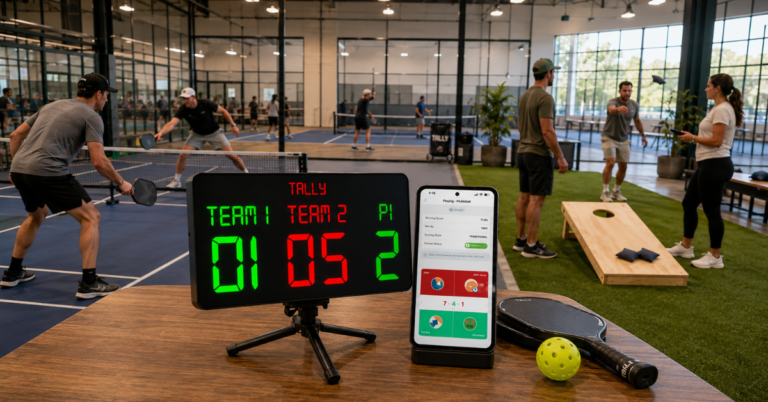
Modern recreational sports are increasingly adopting connected scoring technology as players expect more visibility, automation, and real-time match tracking during gameplay.
This is where smart sports equipment is becoming increasingly important.
Modern players now expect:
- Mobile scoring systems
- App connectivity
- Real-time score tracking
- Portable tournament setups
- Digital scheduling systems
- Wireless communication tools
The days of relying entirely on manual flip scoreboards and paper tournament brackets are quickly coming to an end.
What Players Actually Need in Modern Paddle Sports
As participation grows, players and organizers are beginning to realize that quality gameplay depends on more than paddles and courts alone.
Modern racquet and paddle sports require infrastructure that supports:
- Clear communication
- Efficient scorekeeping
- Tournament organization
- Visibility for spectators
- Faster gameplay flow
- Reduced scoring confusion
Reliable Scorekeeping
One of the most overlooked aspects of recreational tournaments is score management.
In busy facilities or competitive environments, score confusion can quickly disrupt gameplay and create unnecessary delays.
This is especially common during:
- Multi-court tournaments
- Community leagues
- Round robin events
- Open play sessions
- Youth competitions
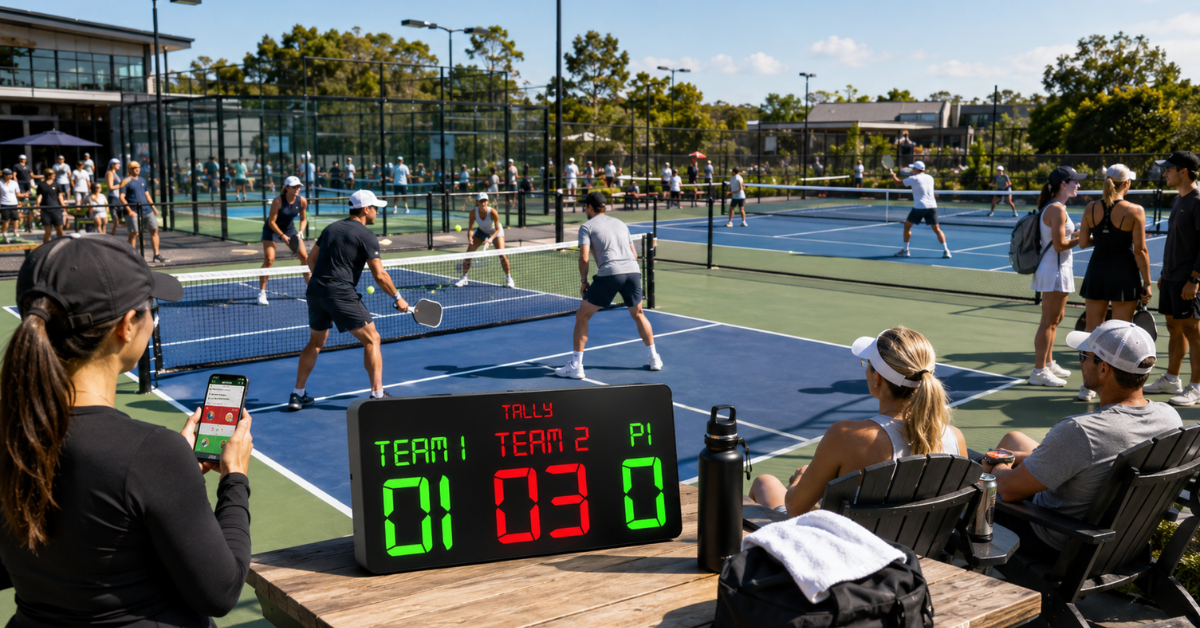
A portable sports scoreboard can significantly improve the experience by keeping scores visible and accurate throughout matches.
As recreational sports facilities modernize, more organizers are comparing manual vs digital scoreboards to improve score visibility, reduce disputes, and create smoother tournament operations.
Visibility in Indoor and Outdoor Conditions
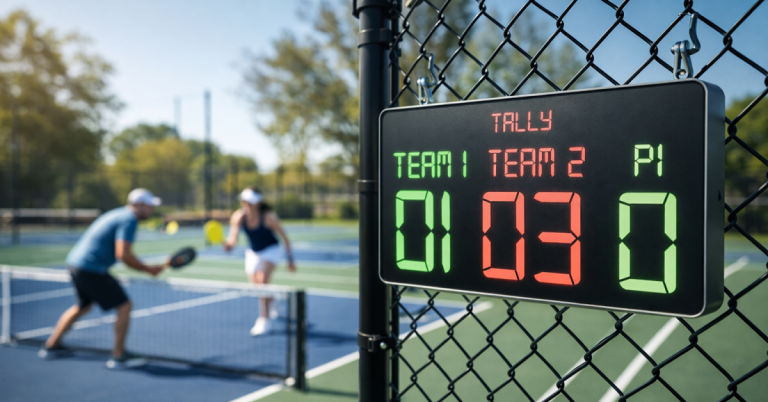
Outdoor courts present unique visibility challenges. Direct sunlight, changing weather, and large playing areas can make traditional scoring systems difficult to read.
A digital sports scoreboard with high-brightness LED visibility solves this issue by allowing:
- Clear score viewing from a distance
- Better spectator engagement
- Faster score recognition
- Improved tournament flow
Indoor facilities also benefit from adjustable brightness and sound controls that adapt to different environments.
Portability and Flexible Setup
One of the biggest needs in modern recreational sports is flexibility.
Facilities often host:
- Temporary tournaments
- Pop-up events
- Multi-use court spaces
- Community recreation days
- Club competitions
A portable pickleball scoreboard allows organizers to quickly set up and move scoring systems without permanent installation requirements.
Portable systems are especially useful for:
- Outdoor parks
- School facilities
- Recreation centers
- Club tournaments
- Traveling competitions
Why Smart Scoreboards Are Becoming Essential
As tournaments become larger and more organized, traditional scoring methods are struggling to keep pace.
A smart scoreboard offers several major advantages over manual systems.
Real-Time Digital Control
Modern smart sports scoreboards can be controlled directly through:
- Smartphones
- Mobile applications
- Bluetooth connectivity
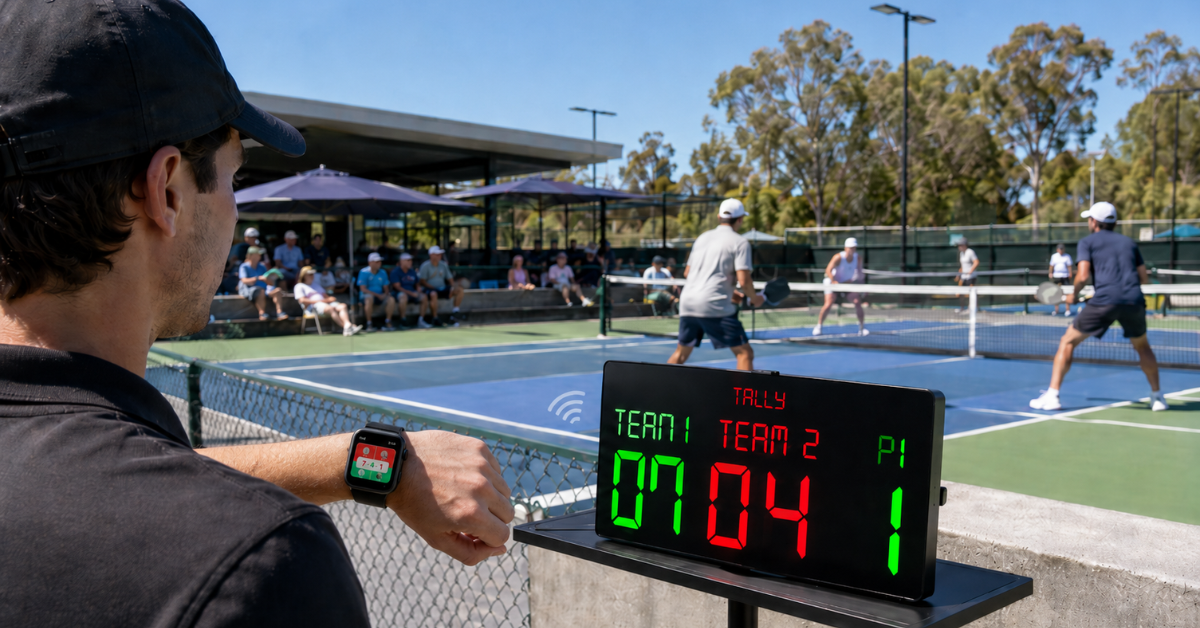
- Apple Watch integration
This creates faster score updates and reduces interruptions during gameplay.
This is particularly valuable in doubles pickleball, where many recreational players struggle with keeping track of the server in pickleball during fast-paced games and tournament play.
Better Tournament Organization
Tournament directors and club organizers need systems that help matches run efficiently.
A digital scoreboard for pickleball tournaments improves operations by:
- Reducing score disputes
- Improving court communication
- Helping spectators follow matches
- Supporting faster player rotation
- Increasing professionalism during events
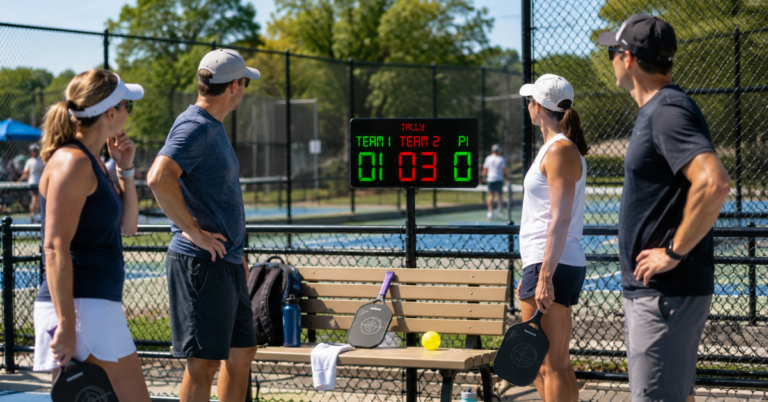
Visible digital scoring becomes even more important during competitive tournament scoring environments where multiple matches and spectators are active simultaneously.
Multi-Sport Functionality
Facilities supporting multiple racquet sports increasingly rely on multi-sport scoring systems that can instantly switch scoring logic between pickleball, tennis, and padel.
A multi-sport digital scoring system can support:
- Pickleball
- Tennis
- Padel
- Badminton
- Table tennis
- Recreational leagues
This versatility enhances the long-term value of equipment for clubs and facilities.
Facilities supporting multiple racquet sports increasingly rely on multi-sport scoring systems that can instantly switch scoring logic between pickleball, tennis, and padel.
The Rise of Connected Sports Equipment
Connected sports technology is becoming one of the biggest recreational sports trends today.
Players increasingly expect:
- Wireless functionality
- Mobile synchronization
- Smart device integration
- Remote operation
- Firmware updates
- Personalized user settings
An app controlled scoreboard reflects this larger shift toward connected recreational experiences.
Instead of manually adjusting hardware settings repeatedly, organizers can:
- Customize team names
- Adjust brightness
- Control sound levels
- Switch sports modes
- Monitor battery status
- Manage Bluetooth connectivity
This creates a smoother and more professional experience for both players and spectators.
Why Recreational Facilities Are Investing More in Paddle Sports
The economic potential behind racquet and paddle sports is becoming impossible for facilities to ignore.
Compared to many traditional sports, paddle sports offer:
- Higher court utilization
- Lower participation barriers
- Strong social engagement
- Faster game turnover
- Broad demographic appeal
Because of this, many facilities are investing heavily in:
- Court conversions
- Tournament infrastructure
- Digital scorekeeping systems
- Portable event equipment
- Smart sports technology
This investment trend is expected to continue as participation numbers grow worldwide.
The Future of Racquet and Paddle Sports
The future of racquet sports growth will likely be shaped by technology, accessibility, and community engagement.
Several major developments are already influencing the industry:
- Expansion of organized leagues
- Increased tournament participation
- Growth in youth programs
- More dedicated paddle sport facilities
- Smarter tournament management systems
- Greater adoption of digital scoring tools
As these sports continue to evolve, player expectations will evolve as well.
Modern players no longer want only a court and a paddle. They want:
- Better organization
- Faster gameplay
- Connected technology
- Professional experiences
- Reliable score tracking
- Portable event flexibility
Facilities and tournament organizers that adapt to these expectations will be best positioned for long-term growth.

Team Tally is the collective voice behind Tally, covering topics related to scorekeeping, match tracking, and connected scoring technology for pickleball, tennis, padel, platform tennis, cornhole, and other points-based games. The team shares insights and updates focused on making scoring simpler, more accurate, and easier to manage during play.