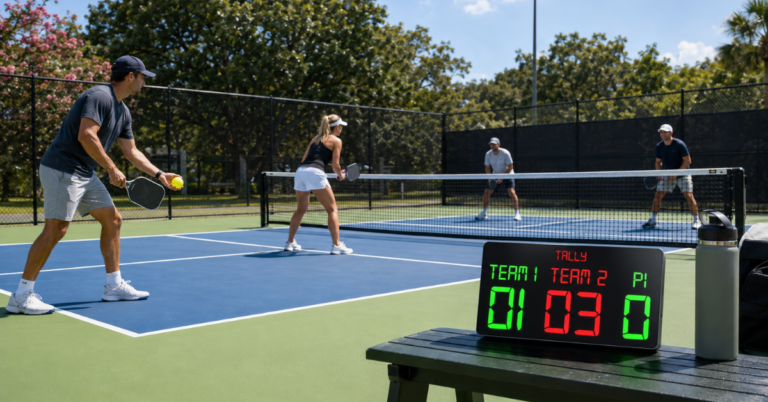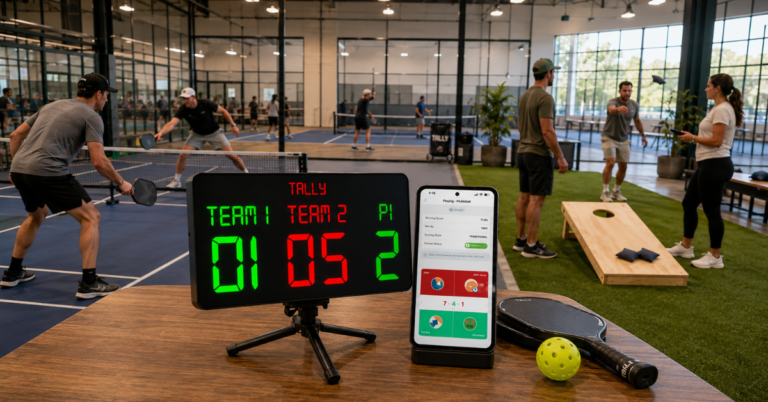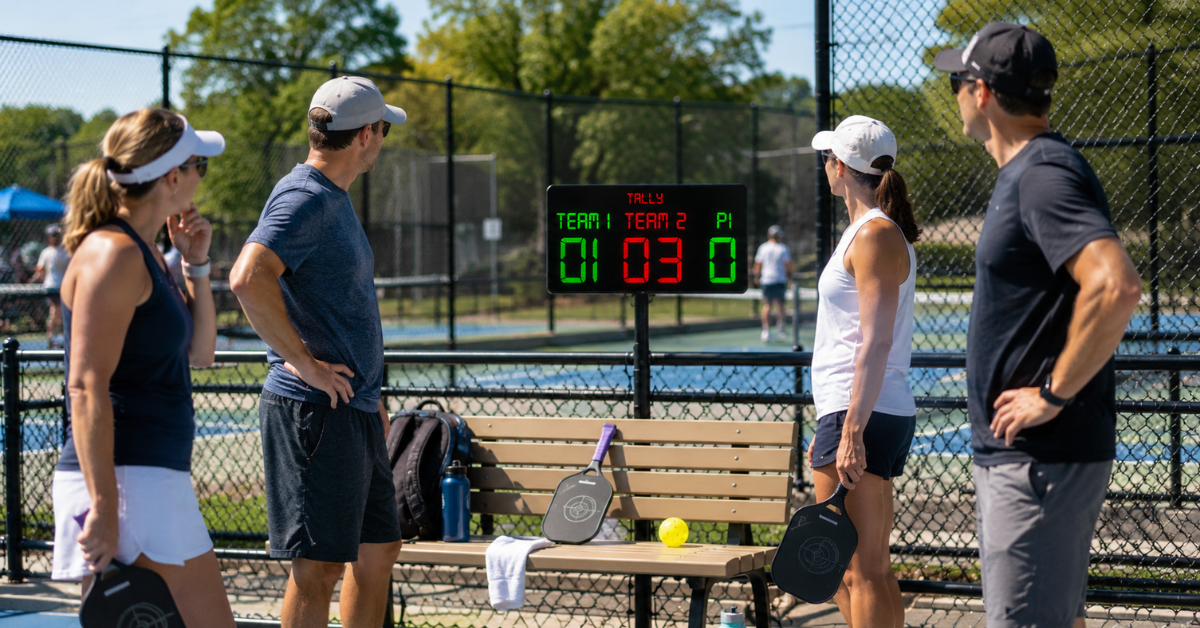
Summary: This guide breaks down the scorekeeping problems that show up most often in amateur and recreational sports, from losing track of the score and confusing scoring systems to disputes, unreliable manual scoreboards, distracted volunteer scorekeepers, and the lack of any record after the game. For each problem it explains why it happens and how to avoid it, and shows how a portable digital scoreboard keeps the score accurate, visible, and dispute-free for pickleball, tennis, padel, platform tennis, cornhole, and any points-based game.
Scoring errors are not a beginner problem. They happen at every level, from weekend rec games to the professional ranks, and they almost always end the same way: frustration, a paused game, and sometimes a heated argument over what the score actually is.
In amateur sports, the stakes feel low, so scorekeeping is often an afterthought. Someone shouts a number between points, a volunteer scribbles on a sheet, or everyone just tries to remember. That works until it does not, and a single forgotten point can change who wins.
The good news is that almost every common scorekeeping problem is predictable and preventable. Below are the issues that come up most often in recreational play, why they happen, and how to avoid them, including how a portable digital scoreboard removes the guesswork entirely.
Why Scorekeeping Goes Wrong in Amateur Sports
Recreational scorekeeping breaks down for a few simple reasons. There is usually no dedicated, trained scorekeeper. The person tracking the score is also playing, refereeing, or watching their kids. Scoring systems can be genuinely confusing. And there is rarely a clear, visible record that everyone can see and trust.
Put those together, and small mistakes are almost guaranteed. Understanding the specific failure points is the first step to fixing them.
Problem 1: Relying on Memory to Keep Score
The most common problem is the simplest one. When players try to hold the score in their heads during a fast, competitive game, points get dropped. A long rally, a quick water break, or a side conversation is all it takes to lose the thread, and suddenly two players remember two different scores.
How to avoid it: Take the score out of everyone’s memory and put it somewhere visible. A scoreboard that updates in real time means no one has to remember anything, and there is a single source of truth every player can glance at between points.
Problem 2: Confusing Scoring Systems
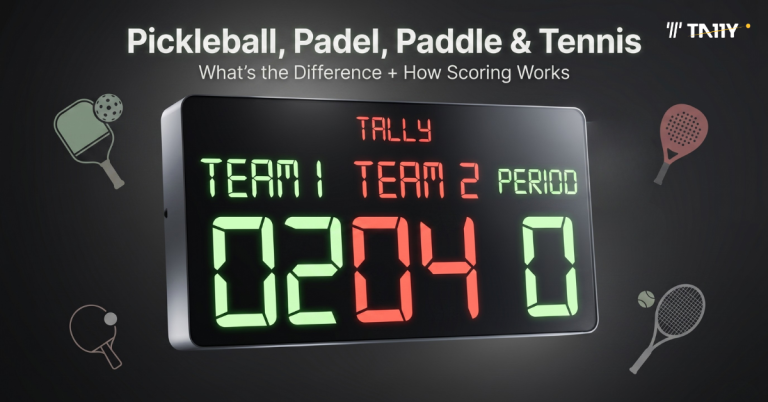
Some sports are simply hard to score out loud. Pickleball is the classic example: in doubles, you call three numbers, like 7-4-2, where the third number is the server number, and play even starts on a confusing 0-0-2. Beginners routinely lose track of who is serving and from which side.
Tennis has its own learning curve with 15-30-40, deuce, and advantage, and its scoring terms confuse new players just as much. When the scoring system is unfamiliar, even attentive players make honest mistakes.
How to avoid it: Use a scoreboard built for the sport you are playing. A device with the correct scoring format for pickleball, tennis, padel, or platform tennis handles the rules for you, so you do not have to track server numbers or call out a sequence you are still learning.
Problem 3: No Visible Scoreboard, So Disputes Happen
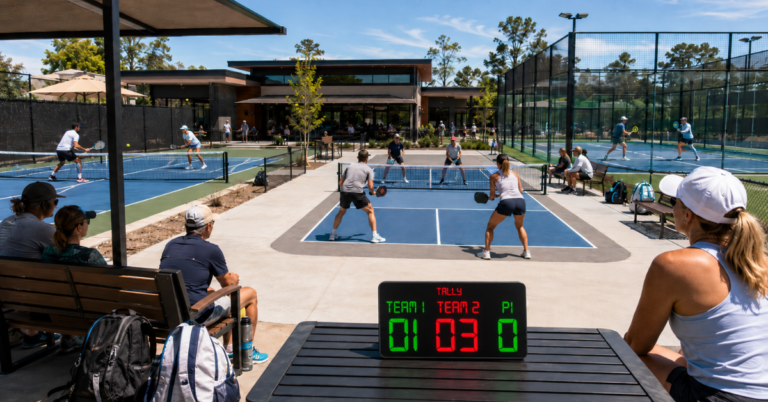
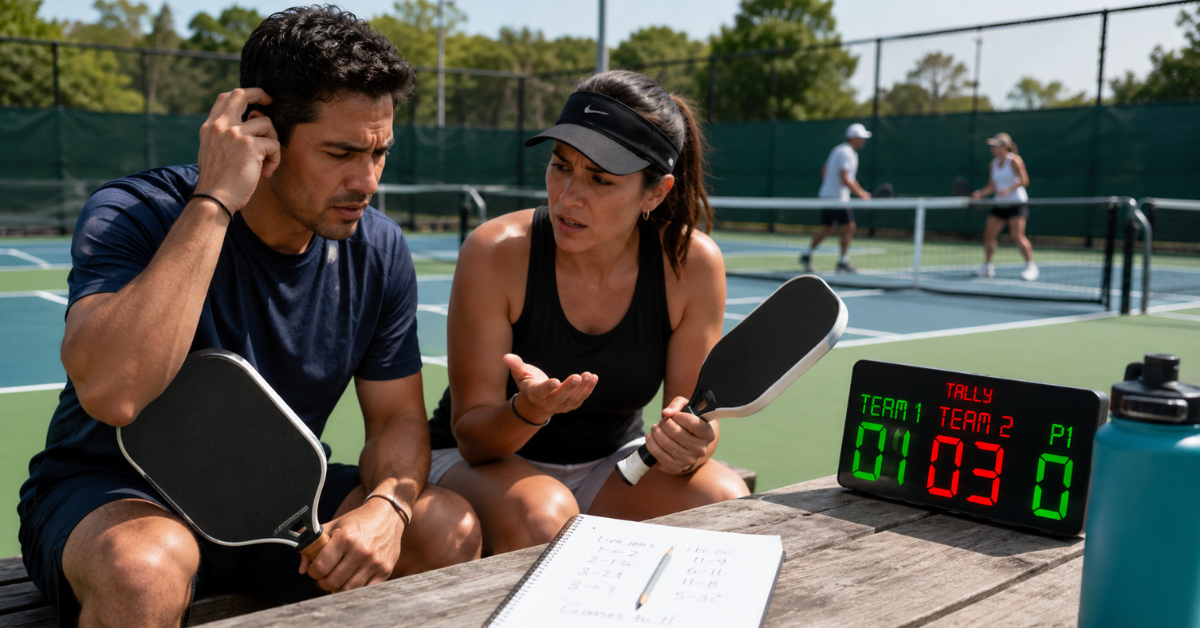
Without a scoreboard everyone can see, the score becomes a matter of opinion. One team says it is 8-6, the other is sure it is 7-6, and there is no neutral record to settle it. These disputes interrupt the game, sour the mood, and in close matches can decide the outcome unfairly.
How to avoid it: Make the score public and unambiguous. When a bright, shared display shows the same number to both sides of the court, disagreements disappear because there is nothing left to argue about.
Problem 4: Manual Scoreboards That Fail in the Field
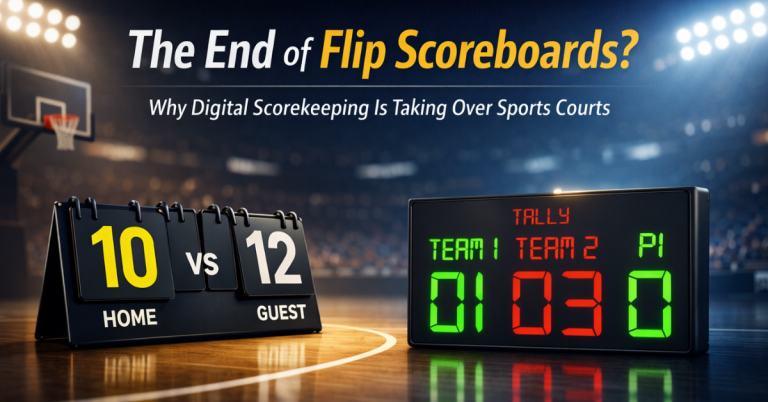
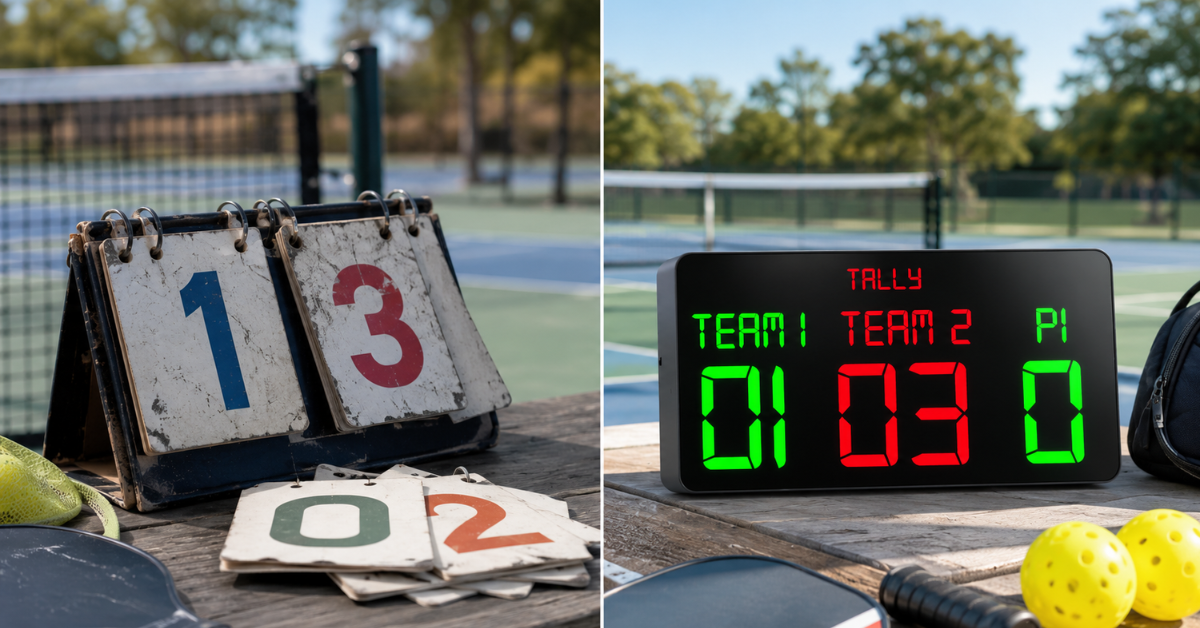
Flip cards, magnetic tiles, and paddle scoreboards are better than nothing, but they bring their own problems. They are easy to bump out of order, hard to read from across the court, useless in low light, and they blow over or fade in the sun. Outdoors, especially, a manual scoreboard is fragile and easy to lose track of.
How to avoid it: Choose a display designed for real playing conditions. A high-brightness LED scoreboard with an anti-glare screen stays readable in direct sunlight and from a distance, and it cannot be knocked out of sequence the way flip cards can.
Problem 5: Distracted or Inconsistent Volunteer Scorekeepers
In leagues and tournaments, scorekeeping often falls to unpaid volunteers who may not be fully trained. Coaching sources note that because scorekeepers are volunteers, plays get missed, mistakes get made, and interpretations vary from person to person. When the scorekeeper is also a parent, coach, or player, attention is split and errors creep in.
How to avoid it: Reduce how much a person has to do. When the score is controlled with a simple tap from a phone or smartwatch and shown automatically on a shared board, you remove most of the manual steps where volunteer errors happen.
Problem 6: Paper Scoresheets and Human Error
Paper score sheets are easy to mismark, smudge, or fill in on the wrong line, and a single miswritten entry can throw off a whole match or bracket. Transcribing scores later, into a spreadsheet or a tournament system, adds another chance for error.
How to avoid it: Capture the score digitally as you play instead of reconstructing it afterward. A scoring app keeps an accurate running total in real time, so there is no messy sheet to interpret at the end.
Problem 7: No Record or Stats After the Game
Manual methods rarely leave anything behind. Once the flip cards are reset or the sheet is tossed, the game is gone. Players who want to track progress, settle a later dispute, or review how a match unfolded have nothing to look at.
How to avoid it: Use a system that keeps the score in an app, so the result lives on after the final point and you are not depending on anyone’s memory.
How to Avoid Common Scorekeeping Problems: A Quick Checklist
- Keep the score visible to everyone, not in someone’s head
- Use a scoreboard that matches your sport’s scoring format
- Make the display bright enough to read outdoors and from a distance
- Reduce manual steps so volunteers and players make fewer mistakes
- Capture the score digitally so there is a record after the game
- Agree on one official scoreboard before play starts to prevent disputes
How a Portable Digital Scoreboard Solves These Problems
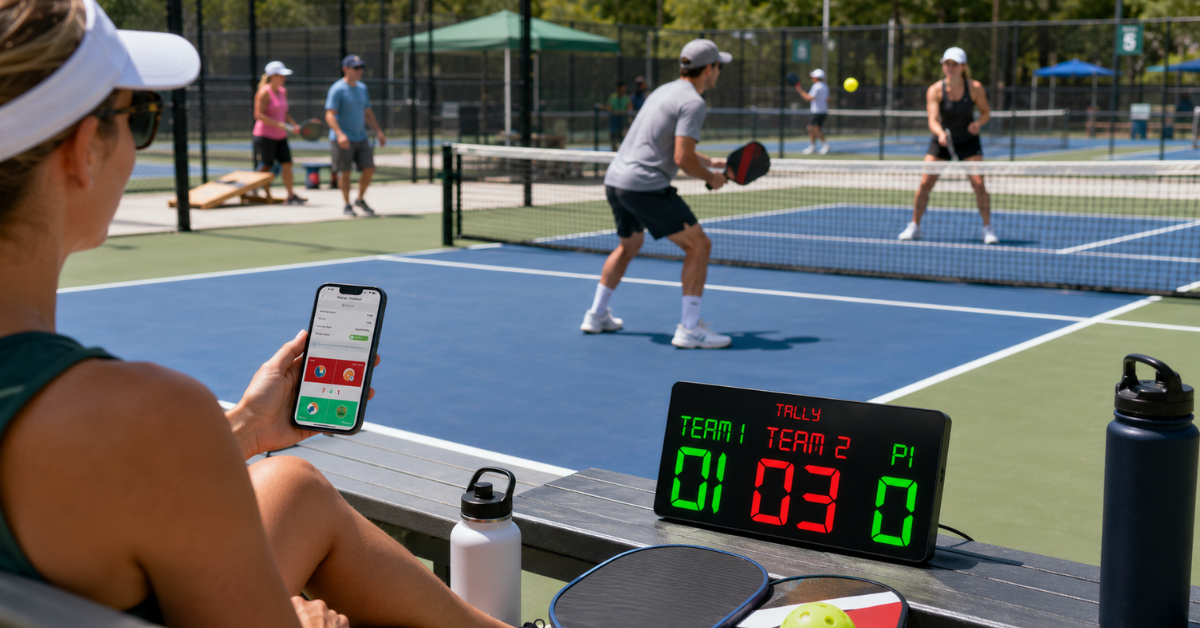
A purpose-built scoreboard removes nearly every problem on this list at once. Tally is a portable digital scoreboard designed for exactly these situations in amateur and recreational sports.
How it helps:
- Control scoring from your smartphone or smartwatch, so no one has to remember the score or flip cards
- Built-in scoring formats for pickleball, tennis, platform tennis, and padel, plus a single points-based mode for any sport or game
- Bright dual-color LED display with an outdoor-grade anti-glare screen, readable in direct sunlight and from across the court
- Custom team names and a clear, shared score that ends disputes
- Up to 8 hours of battery life, USB-C rechargeable, and just 2.2 lbs, so it travels to any court
The result is a single, trusted source of truth for the score. Players focus on the game instead of arguing about the count, and the scoreboard does the remembering. You can find setup and compatibility answers in the FAQs.
Key Takeaways
- Scorekeeping errors happen at every level and usually come from memory, confusion, or no visible scoreboard
- Pickleball and tennis scoring confuse new players, so a sport-specific scoreboard helps everyone keep up
- Manual scoreboards and paper sheets are fragile, hard to read outdoors, and easy to get wrong
- Volunteer scorekeepers make fewer mistakes when manual steps are reduced
- A portable digital scoreboard keeps the score visible, accurate, and dispute-free for any points-based game
Tired of lost scores and on-court arguments? Shop the Tally scoreboard and keep every game accurate, or read more tips on the Game Day blog.

Team Tally is the collective voice behind Tally, covering topics related to scorekeeping, match tracking, and connected scoring technology for pickleball, tennis, padel, platform tennis, cornhole, and other points-based games. The team shares insights and updates focused on making scoring simpler, more accurate, and easier to manage during play.